
Divorce is seldom an unforeseen event. It’s often the result of resentment and frustration that builds over time due to recurring behaviors that are left unchecked for too long. While both parties contribute to the relationship turning sour, it is observed that the majority of divorces are initiated by women. This is NOT about placing blame on one gender. It’s more about understanding the underlying forces that lead to this outcome. Many of these reasons may sound uncomfortable, but they reflect issues that surface across relationships repeatedly. Here are 15 reasons why women take the first step towards divorce.
They Reach Their Breaking Point First

In most cases, women show tolerance for a long time before completely giving up on the marriage. By the time they move for divorce, they’ve already processed this decision emotionally. What feels out of the blue on the outside is actually the end of a long and well-thought-out internal journey.
Emotional Disconnect Becomes Too Much

Physical intimacy can’t sustain a relationship if it’s not coupled with a strong emotional pull between partners. Connection is a major factor in how women evaluate their relationships. When communication fades and emotional bond disappears, it creates a gap that’s hard to ignore. Over time, that disconnection can outweigh the desire to stay.
They Feel Unheard for Too Long

Frustration grows when a husband shows no signs of change even after the wife has expressed her concerns multiple times. When the husband seems dismissive and conversations start to look one sided, a wife starts feeling like her voice and opinion carry no weight. This ultimately causes her to give up on the relationship and look for an opportunity to end it.
They Carry More of the Mental Load
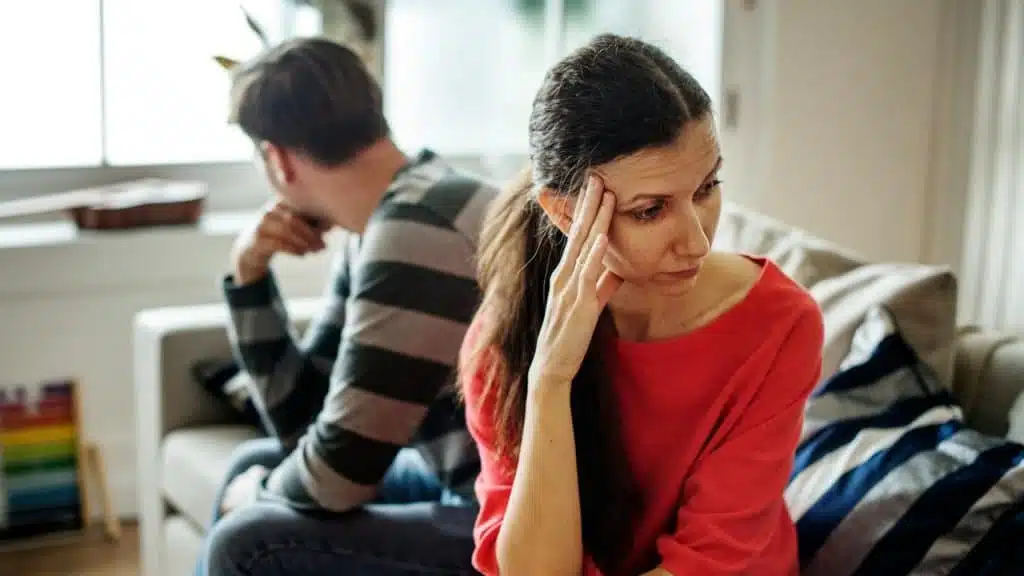
The responsibility of managing the household, planning, remembering important events and organizing often falls on women. Even when both partners work, the invisible workload can become overwhelming. Resentment builds when it stays unbalanced for too long which is not good for a relationships longevity.
Growth Start to Diverge

People change over time, but not always in the same direction. When values, goals or priorities of both partners no longer align, the relationship starts to feel like it’s holding one person back. Staying in such a situation is harder than leaving for most women.
They Stop Feeling Valued

Relationship satisfaction is directly linked to both parties feeling appreciated and admired. When one of them is taken for granted or isn’t appreciated for their efforts, things can spiral out of control. A relationship that lacks appreciation is a relationship that is doomed to collapse.
Conflict Never Truly Gets Resolved

Repetitive arguments that are rarely sorted out can strain a relationship. If both parties find themselves engaged in the same argument over and over again, it is an indicator that nothing has changed and nothing will. Growth becomes stagnant and without it no relationship can last. Women are likely to walk away under these circumstances as they prioritize their mental health well-being more than men do.
They Become Emotionally Independent First

Women bury their emotional interest in partners before they decide to file for divorce. Self-love and self-reliance are a huge part of their mantra for stability. They lower their expectations and do not seek any security from the relationship. Once they are successful in doing that, walking away becomes a walk in the park.
They Seek Stability Over Uncertainty

Unpredictability is a relationship’s Achilles Heel. Women have a hard time feeling secure with a partner who shows no emotional consistency. Such partners demonstrate a lack of reliability that is known to be detrimental for long-term relationships. To spend a lifetime with such irresponsible partners is a mistake most women arent willing to make.
They Feel Like They’re Carrying the Relationship

Much like Lionel Messi is always expected to carry his team every tournament, most women are left to deal with problems that may threaten a relationship’s stability. All this burden can lead to mental or emotional burnouts. Women are highly likely to walk away from these situations to avoid constant pressure.
Expectations Don’t Match Reality

When there is a huge gulf between what they had expected marriage to be and what it really is, disillusionment creeps in. This turns into gradual detachment that could end in complete chaos. The gap between expectations and reality becomes hard to ignore and women end up shutting the door on the relationship.
They No Longer See a Future Together

The idea of a shared future starts getting blurry somewhere down the line once long term compatibility is challenged. Clinging to relationships that are fractured often feels like staving off the inevitable. Bringing such relationships to their well deserved end is the only path to progress and long term peace.
Support Systems Make Leaving Easier

Stronger emotional support networks are a prominent feature of the female experience. Women are known to turn to their friends and family members when times get tough. The idea that they won’t be left alone to fend for themselves provides impetus to abandon a relationship that is not good for their well being and peace of mind.
They Prioritize Emotional Well-Being

When a relationship consistently affects their mental health, it becomes a serious concern. Choosing to leave can feel like choosing self-preservation. Over time, well-being takes priority over maintaining the relationship.
They’re Willing to Act on Dissatisfaction

Recognition of a problem is one thing while acting in a way to do away with it is another. Women are known to take decisive steps due to unhappiness. They prioritize change over the option to stay trapped in a never ending cycle.
Final Thoughts

The causes of divorce are not easy to break down as it is a complex matter. There are multiple factors and not all of them apply to all cases. Women filing for divorce first is not about one side being right and the other being wrong. Instead it only helps us to understand how lack of communication and emotional connection affects a marriage. Analyzing these factors is not a solution to this problem as a whole but it does make it easier to ascertain the health of a relationship and where it’s headed.








Ask Me Anything