
• Skip to primary navigation
  • Skip to main content
  • Skip to primary sidebar
  • Skip to footer

The Modest Man

  • .
  • Topics
    • Fashion
    • Shoes
    • Accessories
    • EDC
    • Hairstyles
    • Cologne
    • See All
  • Reviews
  • Outfit Ideas
  • About The Modest Man
    • Start Here
    • Contact
Home / Blog / Dating & Confidence
We earn a commission on some purchases you make through our site. Here's how affiliate links work.

16 Things You’ll Hear Women Who Think They Are Superior Say

Updated on July 10, 2026 by TMM Staff · Dating & Confidence

A woman with long curly hair is holding up her hand toward a man in a red hoodie outdoors.
©Keira Burton/Pexels.com

Communication is rarely just about the exchange of information. Often, it is used as a tool for social positioning. These specific phrases are designed to establish a hierarchy where the speaker is the gatekeeper of knowledge and you are merely a passive recipient.

“It’s Common Sense Really”

A woman is speaking emphatically to a man who looks distressed as they sit on a couch in a living room.
©Getty Images/Unsplash.com

This phrase is a classic tactic used to make your questions or valid concerns seem intellectually inferior. By labeling their perspective as “common sense,” they imply that any disagreement or lack of prior knowledge on your part is a personal failing of logic.

“Actually….”

A couple sits on a bed after an argument; the woman looks sad while the man holds his hand over his face.
©Kampus Production/Pexels.com

While “actually” can be a neutral corrective, it is frequently weaponized as an interruption to pivot the conversation back to the speaker’s expertise. It signals that whatever you just said was slightly off-base and requires their superior insight to fix.

“I Used to Do That Too”

A man is lying in bed, looking suspiciously at the woman next to him who is smiling while looking at her phone.
©Getty Images/Unsplash.com

When you share an achievement or a new hobby, this response is designed to diminish your excitement. It suggests that your “new” milestone is something they have already mastered and moved past, effectively stripping the uniqueness from your experience.

“I’m Surprised You Did Not Know That”

A couple standing with the backs to each other and holding their hands up to their foreheads.
©Curated Lifestyle/Unsplash.com

This is a shaming tactic used to highlight a perceived gap in your knowledge. It frames your lack of specific information as a shock, suggesting that anyone of “their” level would obviously be informed.

“Let Me Rephrase That for You”

A man is lying in bed, looking suspiciously at the woman next to him who is smiling while looking at her phone.
©Getty Images/Unsplash.com

When someone offers to “translate” your own thoughts, they are attempting to take ownership of your narrative. It implies that you are incapable of expressing yourself clearly and that only their version of the thought is valid.

“I Suppose Not Everyone Can Do This”

A man sits on a bed looking stressed with his hand on his forehead, while a woman lies facing away from him in the background
©Rhema/Pexels.com

This backhanded compliment is used to highlight their own “unique” talents at your expense. It frames their abilities as elite and out of reach for the “average” person, which by extension includes you.

“I Am Just Very Selective”

A man looks away in a kitchen, seemingly upset during a conversation with an out-of-focus woman.
©Getty Images/Unsplash.com

Whether referring to social circles, media, or professional standards, this phrase is used to signal a “refined” taste that is superior to the mainstream. It is a subtle way of suggesting that your preferences are common or unpolished.

“That is a Very Brave Choice”

An upset man is holding his forehead with his hand as his wife sits behind him with crossed arms while they sit on a couch.
©Getty Images/unsplash.com

In the context of fashion, career moves, or personal decisions, calling something “brave” is often a veiled criticism. It suggests that your choice is outside the bounds of what they consider “correct” or “tasteful.”

“Awww That is Cute”

A mature couple on a date clinking glasses and making a toast while sitting at a table.
©Getty Images/unsplash.com

Using “cute” to describe a serious effort or a professional idea is a potent form of infantilization. It dismisses your contribution as a charming but ultimately insignificant attempt, rather than a valid or professional input.

“I Do Not Have the Energy for This Right Now”
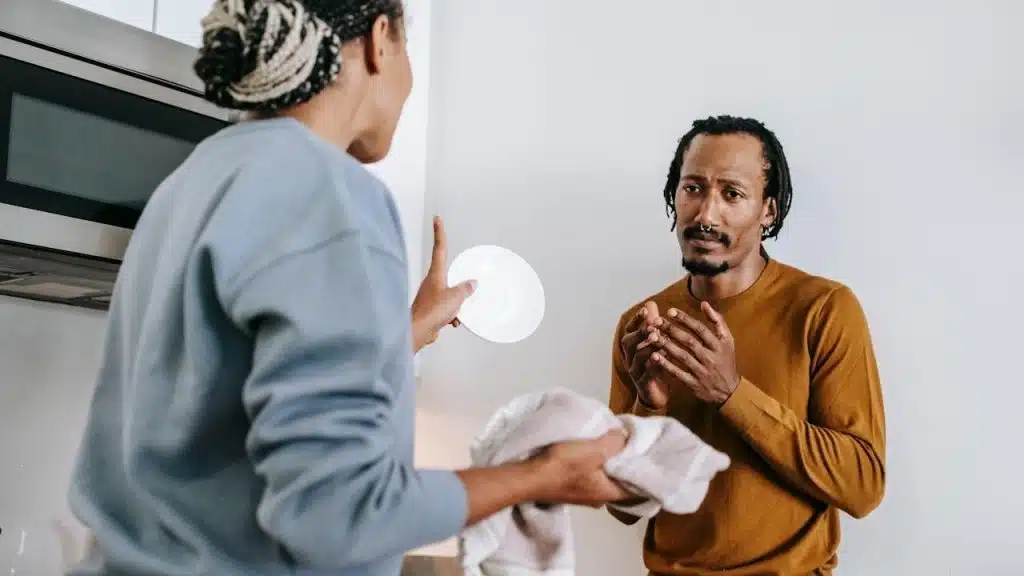
A woman is holding a plate and towel, gesturing while speaking to a man who looks distressed
©Alex Green/Pexels.com

While everyone has boundaries, this phrase is often used as a dismissal to end a conversation where the speaker feels challenged. It frames the interaction as a burden and suggests that your input is taxing rather than valuable.

“You Are Probably Just Overthinking It”

A man is standing in front of a bright window, smoking a cigarette, while a woman sits at a table in the blurred foreground.
©cottonbro studio/Pexels.com

This is a form of intellectual gaslighting. By dismissing your analysis as “overthinking,” the speaker avoids engaging with the substance of your argument while labeling you as neurotic or unstable.

“I Think You Mean”

A woman is sitting on a couch with a distant expression while a man in a turban sits behind her, gesturing toward her.
©Ketut Subiyanto/Pexels.com

Interrupting to provide a “better” word choice is a common way to assert dominance in a conversation. It prioritizes their pedantry over the actual meaning of the discussion.

“You Wouldn’t Understand”

An upset couple standing with their backs against each other.
©Curated Lifestyle/Unsplash.com

This is a direct form of intellectual gatekeeping. By claiming a topic is too complex for you to grasp, the speaker avoids having to explain themselves while simultaneously placing themselves on a higher cognitive tier.

“That is Not How We Do Things”

A couple standing with their faces turned from each other after a fight.
©Getty Images/Unsplash.com

Invoking an invisible standard of “we” suggests that the speaker belongs to an exclusive group with “correct” methods. It is a way to make you feel like an outsider who has yet to learn the proper protocols.

“I’m Usually the One People Turn To”

A sad woman is sitting on a bed, and her husband is looking at her while sitting next to her.
© Getty Images/Unsplash.com

This is a blatant attempt at social proofing. By establishing themselves as a universal authority figure, they imply that your role in the relationship should be that of a student or a subordinate.

“If You Say So”

A couple on the beach are facing the ocean.
©Hoi An and Da Nang Photographer/Unsplash.com

This passive-aggressive conclusion is used to end a debate without conceding a point. It signals that while they disagree with you, they find you too stubborn or misguided to continue the conversation.

Final Thoughts

A couple standing back-to-back with each other.
© Curated Lifestyle/Unsplash.com

Language is one of the primary ways social hierarchies are maintained. When someone consistently uses phrases that dismiss, infantilize, or gatekeep information, they are not just communicating, they are asserting a perceived superiority. Recognizing these patterns is the first step toward refusing to play along with the narrative they are trying to build. Clear boundaries and a firm trust in your own intelligence are the most effective responses to this type of verbal positioning.


Dating & Confidence

Related Posts
Women Think These 16 Things Are Essentially Cheating (Do You Agree With Them?)
When Men Plan to Marry a Woman, They are Looking for these 16 Characteristics.
Don’t Get Involved with Women Who Do these 15 Things Because They are Simply Time-Wasters.
Marriage Isn’t Always Easy: 15 ‘For Worse’ Seasons Every Couple Faces
About TMM Staff

The Modest Man staff writers are experts in men's lifestyle who love teaching guys how to live their best lives.

If an article is published under TMM Staff, that means multiple writers worked on it. For example, sometimes several of us have experience with a certain brand, so we collaborate to publish a more thorough review.

Or, if an article was originally written by one person, but then it was updated by someone else, we'll re-publish it under TMM Staff.

Remember: all of our articles (including those below) are written by real people with decades of combined experience in men's fashion and lifestyle topics.

More Articles by This Author

Facebook Twitter Instagram

Join the Club

Never miss a post, plus grab this free guide (instant download). No spam. Ever.

Subscribe Now

Reader Interactions

Ask Me Anything Cancel reply

Got questions? Want to share your opinion? Comment below!

Primary Sidebar

Join the Club

Never miss a post, plus grab this free guide (instant download).

No spam. Ever.

Subscribe Now

Trending Articles
Business casual outfits
The Modest Man Guide to Men’s Business Casual Style
A person's hands typing on a silver laptop displaying the Hulu streaming service interface with various show thumbnails.
12 Series Finales That Sparked Major Fan Backlash
Seiko 5 SNK805
35 Great Watches for Small Wrists
Men over 40 style
“Old Man Style”: Advanced Age Is the New Sartorial Prime
Fashion brands for short men
Stride in Confidence: Where To Buy Clothes For Short Men
Topics
  • Clothing & Style
  • Outfit Ideas
  • Fitness
  • Product Reviews
  • Dating & Confidence
  • Grooming
  • Men of Modest Height
  • Income Reports
Top 10 Brands
  1. Uniqlo
  2. Nordstrom
  3. Warby Parker
  4. J. Crew
  5. J. Crew Factory
  6. Amazon
  7. Thursday Boot Co.
  8. Mr. Porter
  9. Banana Republic

Footer

The Modest Man logo

Home • Blog • Resources • Contact • Advertise


Privacy Policy & Affiliate Disclosure • Terms & Conditions • Sitemap


As an Amazon Associate I earn from qualifying purchases.


Copyright © 2026 The Modest Man (Registered Trademark)