
There’s a lot of talk about communication in relationships, but most of it skips over the part where well-meaning words still do real damage. You don’t have to be cruel to hurt someone, because sometimes the phrases that sting the most are the ones said without a second thought, almost automatically, like they’re just the thing you say when someone’s upset.
And men, specifically, already deal with enough pressure to keep their emotions buttoned up. So when the one person who’s supposed to be in their corner says something dismissive? That hits different. The goal here isn’t to make anyone feel guilty. It’s to swap out the phrases that push him away for ones that actually pull him closer.
1. “Stress? What Do You Even Have to Be Stressed About?”

Stress doesn’t come with a checklist. There’s no universal criteria that determines whether someone’s allowed to feel overwhelmed, and framing it like there is tells him his experience needs to be justified before it deserves acknowledgment. That’s exhausting for anyone to deal with, but especially for someone who’s already struggling to put words to how they feel.
What he hears when you say this isn’t curiosity. He hears your problems aren’t real enough. And once that message lands, getting him to open up again becomes a much harder conversation to have. Try “what’s been weighing on you lately?” instead because it opens a door rather than closing one in his face.
2. “Okay, We Get It. Can You Stop Complaining Already?”

There’s a difference between venting and complaining, and the person doing the talking rarely thinks they’re doing the latter. When you cut him off with this one, you’re essentially telling him there’s a quota on how much emotional space he’s allowed to take up, and he’s exceeded it. Nobody thrives under that kind of limit.
Beyond the immediate sting, phrases like this teach him to self-censor. He starts editing himself before he even speaks, which means you only ever get the watered-down version of what’s actually going on with him.
3. “That Happened Ages Ago. Why Are You Still Hung Up On It?”

Healing doesn’t follow a calendar. The idea that someone should be “over it” by a certain point is one of the most quietly damaging things people say to each other, and it tends to come out when the other person is tired of hearing about something, not when the person actually feels better.
He’s still bringing it up because it hasn’t been resolved, not because he’s weak or dramatic or fixated. When something doesn’t get properly addressed, it sticks around. Telling him the clock has run out on his feelings doesn’t make them disappear. It makes him feel alone in them.
4. “You’re Way Too In Your Feelings Right Now.”

Too in his feelings compared to what, exactly? This phrase implies there’s a correct emotional temperature and he’s running too hot, which is a fast way to make someone feel like their emotional responses are a flaw that needs fixing. Nobody wants to be told they’re feeling things wrong.
What’s tricky about this one is that it often comes from a place of frustration, not malice. But intent doesn’t cancel impact. Even if the delivery is casual, the message he receives is get it together, and that kind of pressure tends to produce shutdown, not resolution.
5. “You’re Reading Way Too Much Into This.”

Maybe he is. Maybe he isn’t. But the moment you lead with this, the conversation stops being about what he experienced and starts being about whether his interpretation is valid. That’s a pivot he didn’t ask for, and one that tends to make people feel gaslit rather than reassured.
If there genuinely was a misunderstanding, the way to clear it up is to explain your side and let him recalibrate from there. That’s a conversation. The other thing? That’s a dismissal.
6. “Come On, You’re Blowing This Way Out of Proportion.”
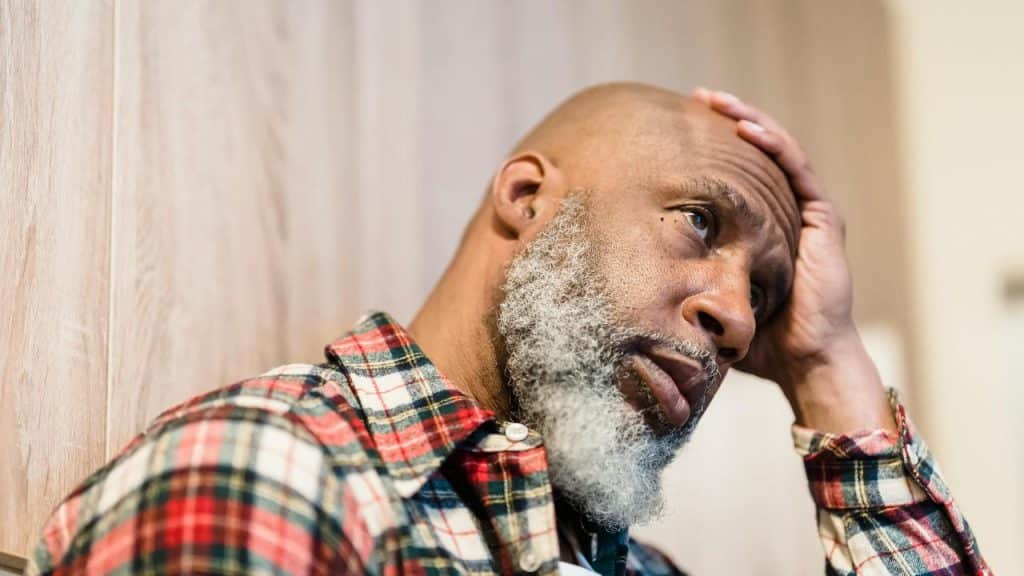
Here’s what this phrase does. It takes his emotional reality and immediately puts it on trial. Before he’s even had a chance to finish explaining himself, he’s already being told his reaction is too big. And once someone feels like they have to defend the size of their feelings, the actual issue gets buried.
Even when the reaction does seem outsized, the move isn’t to call it out directly. Getting curious about what’s underneath it works far better. “Help me understand why this hit so hard” gets you somewhere. “You’re overreacting” dressed up in nicer words gets you nowhere.
7. “Honestly? This Isn’t Even Worth Getting Worked Up Over.”

You’ve decided it isn’t worth it. He clearly disagrees. And therein lies the problem, because worth is subjective, and telling someone their concern doesn’t clear your personal bar for significance is one of the more condescending things a partner can say, even when it comes from a totally relaxed place.
The deeper issue is that phrases like this create a hierarchy where one person’s judgment about what matters gets to override the other’s feelings entirely. Over time, he stops bringing things to you, not because he doesn’t want to, but because he already knows the verdict before the conversation even starts.
8. “Why Are You Acting Like the World Is Ending?”

Hyperbole used against someone who’s already emotional is never a good idea. It’s a way of mocking the intensity of what he’s feeling without technically saying anything mean, which somehow makes it worse. He knows the world isn’t ending. Pointing that out doesn’t help. It humiliates.
What this phrase really signals to him is that his emotional expression is embarrassing to you. And that’s a brutal thing to absorb from a partner. People need to know they can fall apart a little in front of the person they’re closest to without being made to feel ridiculous for it.
9. “Other People Have It So Much Worse, You Know.”

True. Completely, objectively true, and also completely beside the point. Suffering isn’t a competition, and bringing up people who have it harder doesn’t shrink his pain. It just adds guilt on top of it, which is a genuinely terrible combination.
The comparison also implies he should be grateful enough to stop feeling bad, which isn’t how emotions work at all. You can acknowledge that others face harder circumstances and still hold space for what he’s going through. One doesn’t cancel out the other. Let him have his moment without ranking it against someone else’s.
10. “You’re Seriously Throwing a Tantrum Over This?”

The word tantrum is loaded. It’s a word reserved for children who can’t regulate themselves, and using it on a grown man who’s visibly upset is a quick way to make him feel infantilized and humiliated at the same time. Even if his reaction is over the top, framing it this way shuts everything down.
What tends to happen after this one is one of two things. He explodes because he feels disrespected, or he goes completely cold because he doesn’t see the point in continuing. Neither of those outcomes moves anything forward. The phrase might feel satisfying to say in a heated moment, but the aftermath is rarely worth it.
11. “Here We Go Again. You Do This Every Single Time.”

Every single time is a generalization, and generalizations in arguments are almost always a trap. The second you go broad like this, the conversation stops being about the current situation and turns into a referendum on his entire character. That’s a lot to put on someone who came in just wanting to talk about one thing.
There’s also something particularly demoralizing about being told you’re predictably flawed, like your pattern of behavior has already been catalogued and judged. Even if there is a recurring pattern worth addressing, bringing it up mid-argument with that kind of framing guarantees defensiveness, not reflection.
12. “Would You Just Take a Breath? It’s Really Not That Deep.”

Not that deep is one of those phrases that feels casual and ends up being cutting. It’s a way of minimizing the significance of something he clearly finds significant, and doing it in a breezy, dismissive way that makes him feel like he’s being dramatic for caring.
Telling someone to breathe when they’re emotional can also come across as patronizing, even if the intention is to de-escalate. The better move is to match his energy with patience rather than trying to talk him down with a phrase that makes him feel like he’s overcomplicating something simple. He knows how to breathe. What he needs is to feel heard.
13. “Why Can’t You Just Toughen Up a Little?”

This one has a long history behind it, and not a good one. The idea that emotional expression equals weakness is something a lot of men were raised with, and hearing it from a partner, the one person he’s supposed to feel safe with, reinforces every unhealthy message he’s ever absorbed about what it means to be a man.
Toughen up doesn’t teach resilience. It teaches suppression. And suppressed emotions don’t disappear. They resurface later, usually sideways and at the worst possible time. If the goal is a partner who communicates openly and handles hard things well, telling him to toughen up is genuinely counterproductive to that.
14. “You Need to Seriously Chill Out Right Now.”

The irony of chill out is that it almost never produces the chilling out it’s asking for. People don’t calm down on command, especially not when the command comes delivered with an edge. All this phrase really does is add another layer of frustration on top of whatever he’s already dealing with.
There’s an authority dynamic baked into it too, whether that’s intentional or not. Telling someone they need to do something in that tone positions you as the one who gets to decide when his emotional response is acceptable. That’s not a dynamic that leads anywhere good. Meet him where he is first, then work toward de-escalation together.
15. “Stop Making Such a Big Deal Out of Everything.”

Everything is doing a lot of heavy lifting in that sentence. Chances are he isn’t upset about everything. He’s upset about something specific, something that clearly matters to him, and labeling it as everything turns a single moment into a character indictment. That’s a hard thing to come back from in a conversation.
What this phrase communicates, at its core, is that his feelings are an inconvenience. And once a person starts to feel like a burden for having emotions, they stop sharing them. Full stop. The relationship doesn’t get quieter because he’s happier. It gets quieter because he’s given up on being understood. That’s a version of closeness nobody should settle for.








Ask Me Anything