
You probably think you are a “good guy” because you are loyal, hardworking, and you put food on the table. But the reality is that your wife creates an exit strategy long before she actually packs a bag, and it usually stems from the daily behaviors you brush off as insignificant. While you are waiting for a thank you for the big things, the small, silent neglects are slowly convincing her that she is alone in this marriage. This is not a lecture, but a hard look at the subtle patterns that rot a relationship from the inside out. Open your eyes before she closes the door.
Forcing Her to Carry the Mental Load

There is a profound difference between doing a chore and managing a household. When a husband waits to be told what to do, he forces his wife to act as the project manager for the entire family. She has to carry the cognitive burden of knowing what needs to be done, when, and how, while he passively waits for instructions. This dynamic makes her feel alone in the partnership because she is the only one worrying about the details of their shared life. She becomes exhausted not by the physical work, but by the weight of having to think for two adults.
Playing Dumb to Escape Responsibility
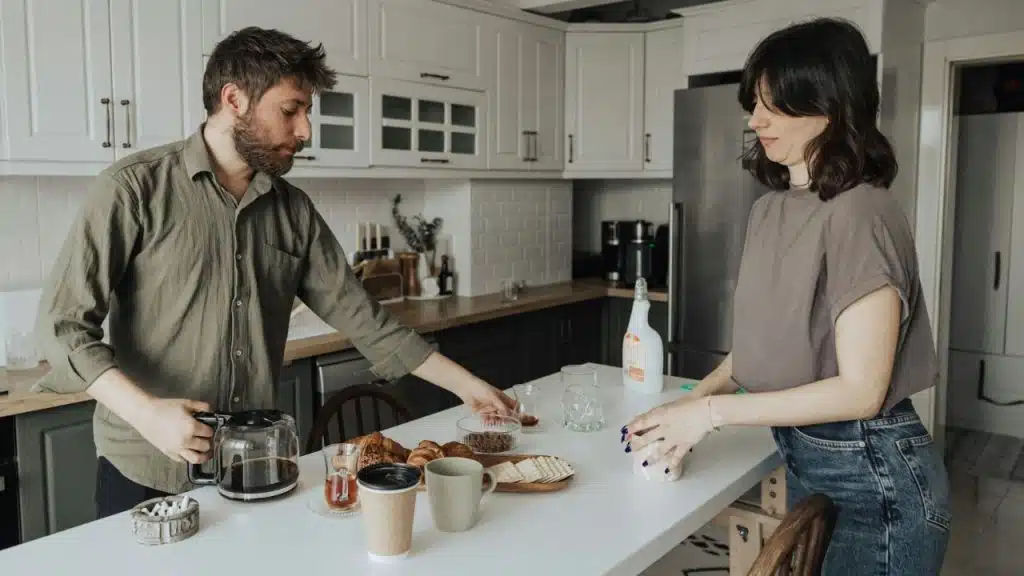
Some men utilize a strategy where they perform a task poorly on purpose so they will never be asked to do it again. Whether it is ruining the laundry or buying the wrong groceries, this feigned incompetence sends a brutal message to a wife. It tells her that his time is too valuable to be spent on mundane tasks, forcing her to take over simply to get it done right. It destroys respect because it forces her to view her husband as another dependent child rather than a capable partner.
Invalidating Her Feelings With Logic

When a woman expresses hurt or frustration, meeting her with cold logic often feels like an interrogation rather than support. A husband might think he is helping by dissecting the facts to prove why she shouldn’t be upset, but this only signals that her emotions are invalid. It creates a dynamic where she feels she must present a court-ready case just to be heard in her own home. Safety disappears when she learns that sharing her feelings will only lead to a debate she is destined to lose.
Prioritizing the Screen Over Her Presence

The habit of grunting a reply while keeping eyes locked on a phone screen creates a distinct form of isolation. It signals that the digital world, work emails, or social feeds are more interesting than the human being standing right in front of him. Over time, these micro-rejections pile up, convincing her that she is boring or unimportant to the man who supposedly loves her most. Connection dies in the silence of a room where two people are present, but only one is paying attention.
Rushing to Fix Problems Instead of Listening

Men are often wired to solve problems, but immediately offering a solution when a wife is venting can feel dismissive. She usually approaches him to share a burden and feel understood, not to hire a consultant to fix her life. When he jumps straight to the answer, it feels like he is trying to fast-forward through her emotions so he can get back to his day. She feels unheard and eventually stops sharing her internal world because she knows it will just be treated as a puzzle to be solved.
Listening for Loopholes to Win Arguments

In many failing marriages, communication turns into a courtroom battle where the husband listens only to find flaws in her statement. Instead of hearing the pain behind her words, he latches onto a minor inaccuracy to invalidate her entire point. This defensive maneuvering ensures that nothing ever gets resolved because the focus is on winning the debate rather than healing the hurt. Trust erodes when a wife feels she is living with a lawyer who is constantly building a case against her.
Relying on Her to Manage His Life

When a wife has to remind her husband to make dentist appointments, take his medicine, or call his own mother, the romantic dynamic shifts into a mother-son dynamic. It kills sexual polarity because it is psychologically difficult for a woman to desire a man she has to raise. She begins to resent the extra work of managing a grown man’s personal responsibilities on top of her own. Attraction fades rapidly when she feels she is the only adult in the room.
Making Her the Bad Cop with the Kids

There is a specific betrayal that happens when a husband undermines his wife’s rules to be the “fun dad.” By letting the kids slide on discipline or boundaries she established, he effectively isolates her and makes her the villain in the family narrative. She is left to enforce structure alone while he reaps the benefits of being the easygoing parent. Resentment builds when she realizes he is prioritizing his popularity with the children over his partnership with her.
Controlling the Finances or Hiding Spending

Financial abuse can be subtle, manifesting as a husband who scrutinizes her small purchases while ignoring his own spending habits. It creates a power imbalance where she feels like a junior employee asking for petty cash rather than an equal shareholder in the marriage. Conversely, hiding debt or financial stress robs her of the ability to make informed decisions about their future. Security is shattered when money becomes a tool for control or a source of secrecy.
Only Touching Her When Sex is the Goal

When a husband only offers physical affection as a prelude to sex, a wife starts to feel like an object rather than a person. She begins to recoil from a simple hug or a hand on the shoulder because she assumes it comes with an expectation of payment in the bedroom. This transactional approach to intimacy strips the relationship of genuine warmth and safety. She feels preyed upon rather than cherished, leading to a complete shutdown of physical intimacy.
Using Emotional Atmosphere as a Weapon

The heavy sigh, the eye-roll, or the slamming of a cabinet door creates a palpable tension that dominates the household. These non-verbal cues create an environment where a wife feels she is walking on eggshells, afraid to ask for help or speak up. It is a way of expressing anger without taking responsibility for it, forcing her to absorb his moodiness. Anxiety becomes the norm in a home where the husband’s silent displeasure dictates the mood of the entire family.
Staying Silent When Others Disrespect Her

A husband who refuses to defend his wife against his own family or toxic friends is signaling that his comfort is more important than her dignity. When he stays neutral to “keep the peace,” he is actually choosing the side of the aggressor and leaving her to fend for herself. It breaks the fundamental agreement of marriage, which is that the couple stands as a united front against the world. She feels abandoned by the one person who promised to protect her heart.
Making Promises That Never Materialize

The constant repetition of “I’ll do it next week” regarding household repairs, lifestyle changes, or dates wears down a woman’s trust. These “future faking” habits might seem small in the moment, but collectively they tell her that his word has no value. She eventually stops asking and stops believing, retreating into a state of independence where she expects nothing from him. Hope disappears when she realizes his promises are just delays rather than commitments.
Assuming He Already Knows Her

After years of marriage, a husband often stops asking questions, assuming he knows everything there is to know about his wife. He stops being curious about her inner life, her changing dreams, or her new fears, engaging only in logistical conversations about the kids or the house. This makes her feel invisible, as if she is merely a function in his life rather than a fascinating individual. Loneliness takes root when she realizes he is content living with a version of her that existed ten years ago.
Neglecting His Own Physical Health

It is a heavy emotional burden for a wife to watch her husband deteriorate physically because he refuses to take care of himself. When he ignores his health, he is implicitly telling her that she will eventually have to become his nurse. It forces her to live with the constant underlying fear of his preventable illness or early death. She feels burdened by his refusal to steward his own body for the sake of their shared future.








Ask Me Anything