
Life rarely becomes heavy all at once. Pressure builds through responsibility, expectation, loss, and time, layering itself until emotional capacity narrows. Men often continue functioning long after internal flexibility has reduced. These patterns do not emerge from weakness, but from adaptation under sustained load. They develop quietly, without conscious decision. Understanding them requires slowing down enough to notice what has changed internally.
Shrinking Emotional Range to Preserve Energy

As pressure increases, emotional expression becomes selective. Men feel fewer emotions fully, not because they are absent, but because energy is limited. Joy, curiosity, and vulnerability require capacity that feels unavailable. Emotional range contracts to what feels manageable. This narrowing preserves function but reduces depth. Life becomes emotionally efficient rather than emotionally rich.
Prioritizing Control Over Emotional Openness

Uncertainty increases emotional strain. Control becomes a way to regain footing. Men focus on what can be managed externally while internal states remain unexamined. Emotional openness feels risky when outcomes feel unstable. Control offers structure, but it also restricts connection. Emotional flexibility gives way to rigidity.
Treating Feelings as Distractions Rather Than Information

Under pressure, emotions are viewed as interruptions. Men push feelings aside to stay productive. Emotional signals are delayed rather than processed. Over time, this creates an internal backlog. Feelings do not disappear; they wait. Emotional awareness becomes reactive instead of continuous.
Reducing Emotional Availability to Conserve Capacity
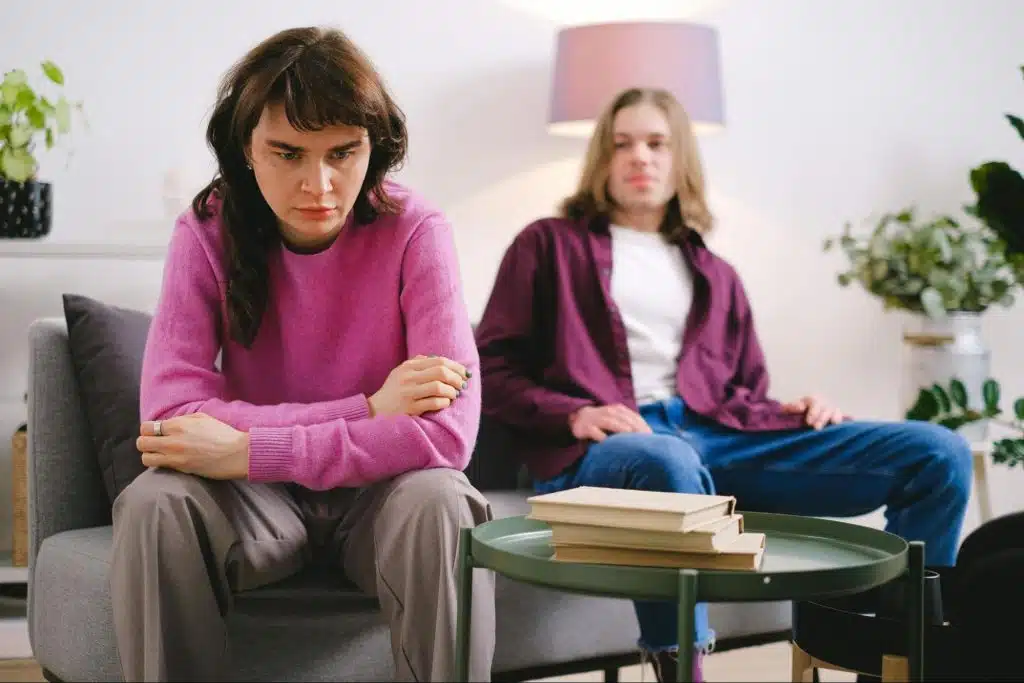
Availability requires energy. When life feels heavy, men conserve by pulling inward. Emotional responsiveness becomes slower and more limited. This withdrawal is not rejection, but protection. Over time, reduced availability becomes a pattern. Distance feels safer than engagement.
Preferring Solitude Over Shared Processing

Shared emotional processing feels demanding. Solitude offers relief from expectation. Men retreat to spaces where explanation is unnecessary. Alone time becomes essential rather than restorative. Over time, isolation replaces connection. Emotional self-containment hardens.
Limiting Conversation to What Feels Necessary

Conversation narrows to logistics and essentials. Emotional nuance feels excessive. Men speak to resolve, not to explore. Dialogue loses texture. Communication becomes efficient but thin. Emotional exchange fades quietly.
Focusing on Tasks to Avoid Emotional Ambiguity

Tasks provide clarity when emotions feel murky. Men channel energy into action. Productivity replaces reflection. Emotional questions remain unanswered. Over time, doing replaces feeling. Action becomes an emotional shield.
Becoming Less Tolerant of Emotional Complexity

Complex emotions demand attention and patience. Under load, tolerance decreases. Men seek simplicity where possible. Nuance feels exhausting. Emotional reactions become more binary. Subtlety is lost.
Relying on Structure to Contain Internal Chaos

Structure provides predictability. Routines, rules, and schedules anchor emotional instability. Men lean heavily on order. While structure stabilizes, it can also be confined. Emotional spontaneity disappears. Life feels contained rather than alive.
Withholding Emotional Expression to Avoid Burdening Others

Men often believe their emotional weight should not spill outward. Silence feels responsible. Expression feels indulgent. Over time, withholding becomes a habit. Emotional pressure builds internally. Silence carries an unseen cost.
Delaying Expression Until the “Right Time”

There is always a more appropriate moment to speak. Stress, fatigue, or timing postpone expression. Eventually, moments pass without return. Emotional truth ages without release. Delay becomes default. Silence outlasts intention.
Using Humor or Detachment to Deflect Depth

Humor lightens tension quickly. Detachment keeps things manageable. Men use both to redirect emotional weight. These tools work temporarily. Over time, they replace sincerity. Depth is traded for control.
Measuring Strength by How Much Can Be Carried

Endurance becomes identity. Men gauge resilience by tolerance. Expression feels like weakness when survival is prioritized. Carrying silently becomes proof of competence. Over time, capacity erodes. Strength becomes heavy.
Accepting Emotional Fatigue as Permanent

Fatigue settles in quietly. Men stop expecting relief. Emotional tiredness feels normal. Hope for lightness fades. This acceptance stabilizes expectations but dims vitality. Life feels managed, not felt.
Lowering Emotional Expectations to Avoid Disappointment

Expectations shrink to prevent further strain. Men stop reaching emotionally. Desire is adjusted downward. Satisfaction becomes survival-based. Emotional ambition fades. Stability replaces aspiration.
When Patterns Harden Into Identity

Left unexamined, patterns solidify. Temporary responses become permanent traits. Men forget the emotional flexibility they once had. Identity adjusts to endurance rather than expression. Life remains stable but less responsive. Recognition is the first interruption.
What Awareness Actually Offers

Awareness does not resolve heaviness. It clarifies it. Seeing patterns reduces confusion and self-judgment. Men recognize these shifts as responses, not failures. Understanding restores choice. Heaviness becomes visible rather than undefined.
When Life Is Heavy, Patterns Make Sense

These emotional patterns emerge because they work. They allow men to continue functioning under sustained pressure. They are not signs of emotional absence, but emotional conservation. The cost appears slowly, not dramatically. Awareness does not remove weight, but it changes how it is carried.








Ask Me Anything