
Some men move through life like they’re walking on eggshells nobody can see. They lower their voice, soften their edges, or pull their energy back because they think everyone else needs the gentler version. After a while, a man may feel like he’s running half-speed with the brakes on.
This whole thing creeps in slowly. One small retreat turns into another, then another, until a man barely recognizes how much space he could take if he stopped trimming himself down. So here’s a straight-up guide to those sneaky patterns that you should never apologize for, because why should you?
1. That Weird Guilt You Feel When You Don’t Reply Right Away

Plenty of men text late because life pulls them in every direction, yet a strange guilt punches through their ribs the second they see the unread message. That twitchy “oh no, I’m late” pressure hits even when the situation calls for absolutely none of it. A normal delay somehow feels like a personal failing.
Here’s the truth: nobody hands out medals for immediate responses. That guilt trains a man to shrink so he can look endlessly available. Once he steps back and thinks, Wait… replying later is normal, a huge amount of that tension melts off his shoulders.
2. Mocking or Hiding the Things You Love

A lot of men downplay the stuff they love when someone raises an eyebrow. A hobby turns into “nothing serious.” A collection turns into “something random.” An interest turns into “kinda dumb.” The whole point is to duck away from judgment before it reaches him.
But every time he throws those air quotes around his own interests, he hands a slice of himself over to the crowd. Loving something with full force creates presence. Hiding it creates a smaller version of a man who actually deserves more room.
3. Feeling Bad for Walking Away From Toxic People

Some men feel guilty when they leave a harmful situation, even when walking away makes total sense. Someone acts unfairly, someone drains him dry, someone pulls him into stress that never ends, and somehow, he feels like he should apologize for stepping away.
This twists his sense of responsibility. He starts shrinking to make poor behavior easier to stomach. When a man removes himself without guilt, his whole world feels cleaner, lighter, and far more breathable.
4. Apologizing for Not Knowing Something

Men often say “sorry, I didn’t know” before asking a perfectly normal question. It’s like they think curiosity equals incompetence. But questions fuel growth, not shame. Nobody knows everything, and nobody should pretend to.
That unnecessary apology slices confidence down bit by bit. A man who asks without shrinking feels taller and sharper instantly. People respect someone who says, “Tell me more about that,” without running from the potential embarrassment.
5. Justifying Money Spent on Yourself

Plenty of men treat any personal purchase like a courtroom trial. New shoes? Must explain. Gym membership? Must defend. A hobby upgrade? Must apologize before someone accuses him of selfishness.
But the world feels better when a man invests in himself without fear. He works, he earns, and he deserves to spend on things that matter to him. No cross-examination needed.
6. Hesitating to State What You Want in Bed

When a man speaks plainly about what he wants, something powerful happens. He stops shrinking and starts meeting intimacy with all of himself. That confidence changes everything.
7. Apologizing for Rest and Sleep

A grown man apologizes for taking a nap. Think about that. He says sorry for needing rest like it’s a crime against humanity. How many times has a man said, “Sorry, I fell asleep,” as if sleep counts as bad behavior?
Rest fuels his entire life. Nothing good comes from treating it like an offense. A rested man possesses more strength, more reach, and more presence. No apologies required.
8. Treating Help As a Personal Failure
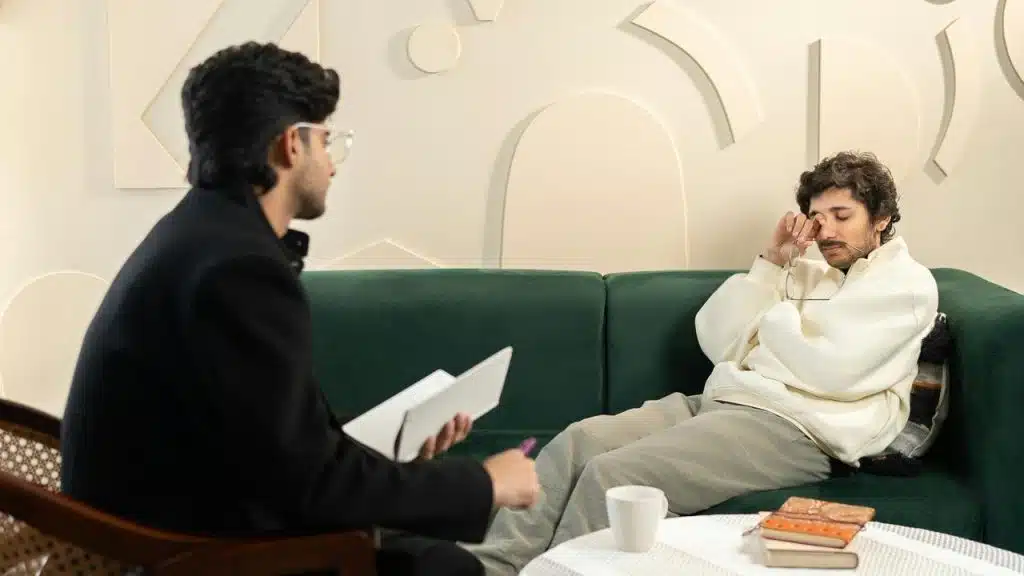
Plenty of men get stuck in the belief that accepting help equals weakness. So they refuse it until they’re drowning. When someone steps in, they apologize or downplay how bad things got.
But reaching out or saying “yeah, help is welcome” keeps a man grounded in real strength. Independence grows from support, not from isolation. A man who accepts help stands taller, not smaller.
9. Downplaying Your Desire for More

Many men want bigger lives, more excitement, more adventure, and more growth, but they bite their tongue because they worry about sounding ungrateful. They water down their own ambition to avoid any hint of arrogance.
But shrinking a dream makes no one safer or happier. When a man admits, I want more than this, something inside him wakes up. That spark pushes him forward instead of pulling him down.
10. Feeling Guilty for Taking Care of Your Body

A man who takes care of himself often feels guilty for the time it takes. He apologizes for the gym, for grooming, for long showers, for anything that makes him feel better physically.
Taking care of his body strengthens every part of his life. There’s nothing selfish about it. No man shrinks by strengthening himself; he only rises.
11. Prefacing Your Opinions With Apologies

Many men preface opinions with “sorry, but…” or “not sure if this matters, but…” before saying anything. It’s a way to dodge disagreement before it even appears.
But an apology at the start turns his words into something smaller than they need to be. When a man speaks without that protective padding, people hear him with more respect and attention.
12. Downplaying Your Personal Style

Some men hold back from dressing the way they want. They fear the comments, the teasing, the “who do you think you are?” remarks. So they choose the most forgettable version of themselves.
But style gives a man presence before he even opens his mouth. When he dresses the way he prefers, whatever that looks like, he feels more like himself and not less.
13. Acting Ashamed of Your Emotions

Plenty of men apologize when their voice cracks, when their face tightens, when their chest gets heavy, or when their eyes water. They act like feeling things equals weakness.
Emotion reveals depth, not failure. A man who allows himself to feel without apology grows into someone far stronger than the guy who hides behind that stiff mask.
14. Softening Every “No” With Guilt

Many men treat “no” like a dangerous word. They stuff it with apologies, excuses, and qualifiers so no one gets upset. That makes every refusal feel like a confession instead of a boundary.
A clean and simple “no” protects a man’s energy far better. When he speaks without guilt, he becomes someone who respects his own limits, and others start to respect them too.
15. Apologizing for Needing Space

Every man needs his own personal space when things get chaotic. Time alone, time to decompress, and time to reset. But plenty of men apologize for it as if they committed a crime by stepping away.
Space allows a man to think, breathe, and return to life with more strength. Asking for it without apology shows maturity and confidence, not distance or coldness.








Ask Me Anything