
Age gaps in relationships have always been a topic of controversy and debate. While some couples with a significant age gap set an example of how true love doesn’t rely on age, ethnicity or borders. Others set the wrong precedent, as the differences in mindset, emotional maturity, life experiences, and priorities may get in the way of establishing a deep connection.
The average age gap around the globe is two to three years, which makes it the ideal age difference too. Larger age gaps that raise eyebrows are usually above ten years. It’s hard to sustain a relationship as the way of thinking, future goals, the stage of personal or professional growth, and even seriousness towards a relationship may starkly differ.
But in the end age is just a number. Genuine love transcends all bounds. Here are 15 truths all couples must know about age gaps and how they impact the dynamics.
Most Couples Are Close in Age

Statistics from all over the world suggest the majority of couples in a heterosexual relationship are close in age. Usually the age difference is two to three years. This makes them more emotionally and mentally compatible. They are able to relate with each other’s experiences and stages of growth.
A Small Age Gap Usually Isn’t a Problem

The smaller the age gap, the less friction is observed between the mentalities of both partners. An age difference beyond 5 years impacts the way two people may perceive the exact same problem, which may lead to fallout.
Ten Years Is Often Considered a “Large” Age Gap

A gap of more than 10 years becomes an unbridgeable gap between two partners when it comes to shared mindset and perspectives. A couple with a huge age gap of ten years or more is viewed with criticism even in society. A famous study from Emory University found that couples with a 5-year age gap are 18% more likely to divorce than same-age couples. This jumps significantly for a 10-year gap and 95% for a 20-year gap.
Life Stages Can Create Challenges

There may be no doubt about the love and affection you feel for each other, but being so far away in age can make you both poles apart in your individual “approach” towards life. A person in their 20s may see the world, future, career and lifestyle differently while a partner in their 30s or 40s will have a completely different take on life, as both are at completely different stages in life. The real challenges aren’t often the current age difference, but the “biological clock” and “retirement horizon”.
Power Imbalances Can Sometimes Appear

The partner who is older may be more emotionally mature and may feel the urge to unnecessarily overcorrect the younger partner, not allowing them to learn from their own experiences. To the younger partner this power imbalance may come across as an expectation of sacrificing their autonomy. This dynamic creates resentment and may become a reason for the eventual collapse of the relationship.
Society Often Judges Large Age Gaps

Age-gap may not be the sole reason a relationship with a prominent age difference collapses, sometimes the side-eyes, the criticism and judgment a couple receives from society may ruin their connection. Some couples fail to endure the external pressure and deem parting ways as the only solution to the constant emotional load.
Generational Differences Can Affect Communication

Partners who belong to two entirely different generations, like a millennial dating a Gen-Z partner may encounter unique challenges: The communication style, the overall outlook on life, the expression of love and even cultural expectations may be distinct, with both being valid.
Family Planning Can Become Complicated

Age differences also spark a debate around when to start a family, like a younger woman in her early twenties may be fixated on accomplishing her life and career goals, while her partner in his 30s may have achieved stability by now (a different life stage) and would see planning a family as his top priority in life.
Retirement Timelines May Clash

The older partner may reach retirement and all other milestones sooner. They may have their own travel plans or any other such goals in life while the younger partner is still struggling to achieve their career targets. This disconnect in life stages makes a shared long-term vision elusive.
Emotional Maturity Matters More Than Age

In defence of couples who fall in love deeply despite an age difference, experts have emphasized that it is mental compatibility, emotional maturity and shared values that make the whole difference ultimately. In such cases, age becomes nothing beyond an intangible figure.
Some Age-Gap Relationships Thrive

Despite the various challenges that come as part and parcel of age-gap couples, many couples serve as role models. George Clooney and Amal Clooney, for instance, are a power couple that stands out despite a visible age gap. Strong and happy relationships are built upon deep connection, mutual respect for opinions, and open communication.
The Older Partner Isn’t Always the Man

Society holds a stereotype that in all such relationships the older partner is always a man which unfairly labels a woman as a gold digger or greedy. But many successful couples exist that defy the norm where women may be the older partner, proving it’s pure love that drives such connections, not greed. In the U.S., about 1.3% of marriages involve a woman 10+ years older, but “age-gap” dating where the woman is five to ten years older is actually rising in digital dating trends.
Emotional Compatibility Is the Real Test

Couples that thrive aren’t decided on the basis of age gaps. Having shared values, mentality and vision for life are the real determinants of a relationship’s success. The more commonalities the higher the prospects of a healthy connection.
Respect and Equality Are Essential

Typical average age difference or a huge age-gap, healthy relationships require mutual respect and equality as the fundamental values upon which the foundation is laid. If these are absent even ideal age gap couples may not survive long.
Age Alone Doesn’t Define Relationship Success
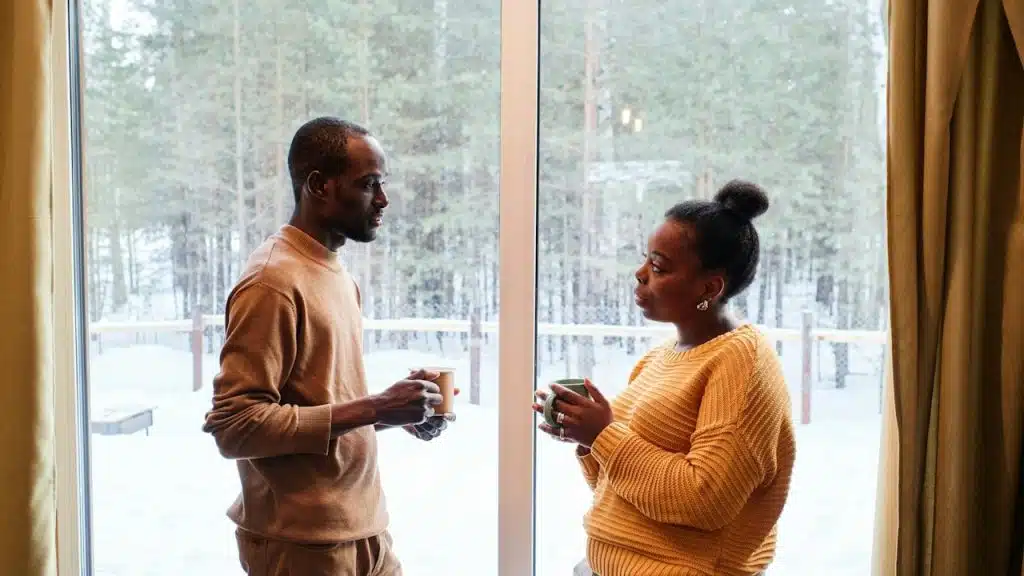
Being close in age does not guarantee a lifetime of togetherness and happiness, because how great a relationship works out does not solely rely on age but myriad other factors, the most important being compatibility.
Final Thoughts

The question of how much age difference is too much doesn’t have one correct answer. As there is no one rule for all dynamics when it comes to relationships. While the stats may back fewer success chances for age gaps beyond 10, despite the low probability, many age gap couples lead a very promising life together. In a nutshell, age may be one factor; the real test of a relationship is maturity, respect, support, mutual growth, unconditional love, effective communication, and a resolve to focus on similarities above differences, which decides the trajectory of a relationship, which diminishes the value of age to just a number. Support, understanding, and respect.








Ask Me Anything