
Confidence doesn’t always look loud. In fact, the people who truly know their worth don’t need to overshare, overexplain, or overcompensate. The signs are often subtle–but unmistakable. From how they carry themselves to how they draw boundaries, it’s all about quiet cues that speak volumes. If you’ve been working on self-respect and self-awareness, here’s how it shows up in your everyday behavior–without you even realizing it.
1. You Pause Before You Answer

People who know their worth aren’t afraid of silence. They take a breath before responding–not to stall, but to consider. That pause says, “My words matter, and I don’t rush to fill space.” It also gives them a chance to decide whether the question even deserves an answer. When you’re rooted in your own value, you realize not everything requires your energy or explanation.
2. You Don’t Brag–You Share

Bragging needs validation. Sharing invites connection. People with self-worth can talk about their wins without turning it into a performance. They don’t inflate, downplay, or make everything about themselves. They just let the facts speak. You’ll hear them mention their achievements in passing, not as a pitch. Because when you’re secure, you don’t need to be impressive–you already are.
3. You Say “No” Without the Guilt Hangover

Saying no isn’t a power move–it’s a peace move. People who know their worth don’t crumble under the pressure to please. They decline with clarity, not cruelty, and they don’t spiral into guilt or justify their every choice. Boundaries aren’t walls to them; they’re filters. They trust that saying no to the wrong thing makes space for the right one.
4. You’re Comfortable Being Unavailable
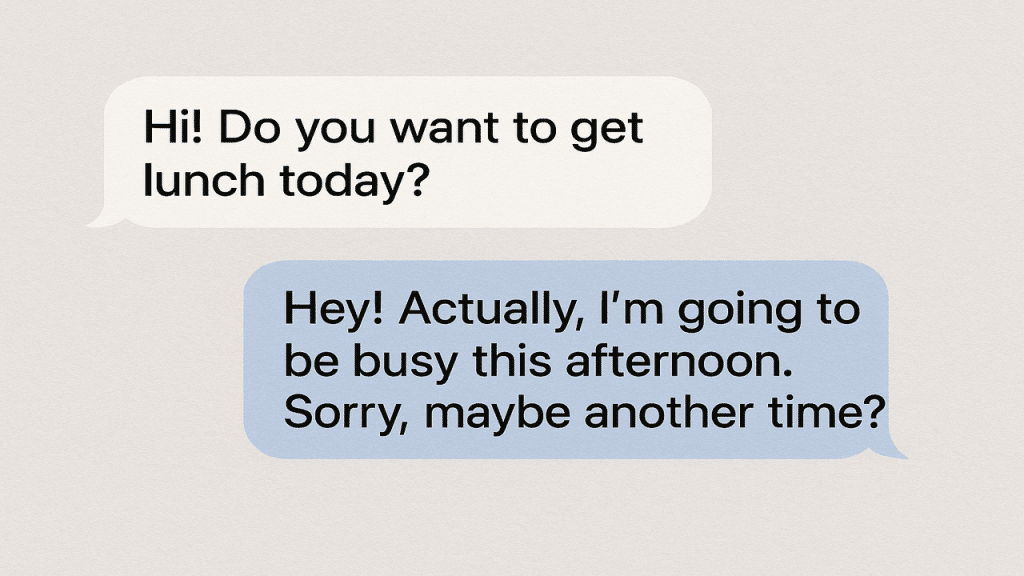
You don’t jump to reply to every text or email. You don’t feel bad taking time to yourself. Being unavailable isn’t about playing hard to get–it’s about not needing to be constantly “on.” If someone sees your lack of instant access as a problem, that’s their expectation to manage. Your time is valuable, and you act like it.
5. You Don’t Overexplain Yourself

People who know their worth don’t feel the need to constantly justify their decisions. They speak clearly and directly, trusting that their reasons are enough. They don’t spiral into paragraphs trying to convince someone to understand. Their actions are aligned with their values–and that’s the only validation they need.
6. You Notice Red Flags Without Making Excuses

Self-worth sharpens your vision. Instead of talking yourself into tolerating bad behavior, you spot it and step back. You don’t rewrite people’s actions to make them fit your hopes. You believe what they show you the first time–and you walk away with grace, not resentment. That discernment? It’s a muscle built from respecting your own time and energy.
7. You Keep Your Standards in Quiet Places

You don’t just have high standards for partners, friends, or coworkers–you hold them for yourself, even when no one’s watching. That means how you talk to yourself, how you manage your space, how you spend your downtime. Self-worth isn’t performative–it shows up in the small, private habits that set your baseline.
8. You’re Not Bothered by Being Misunderstood

People who know their worth don’t chase clarity from people who are committed to misunderstanding them. They know their truth–and they know that not everyone will get it. Rather than waste energy convincing others, they let misinterpretations go. Not every opinion needs to be corrected, and not every version of you is worth defending.
9. You Listen More Than You Perform

You don’t try to dominate every conversation. You’re not waiting for your turn to talk–you’re actually hearing people. That presence says more about your confidence than any monologue ever could. When you listen with intention instead of performance, you signal that you’re secure enough not to need the spotlight.
10. You Don’t Cling to People Who Make You Shrink

You’ve outgrown the need to be liked by everyone. If someone consistently makes you feel small, you don’t chase their approval–you remove yourself. People who know their worth don’t shrink to fit. They don’t stay in dynamics that dim their light. They’d rather be alone than be diminished.
11. You Ask for What You Need Without Apology

You don’t drop hints. You don’t hope people read your mind. You speak up–calmly, clearly, and without guilt. Whether it’s emotional support, space, respect, or clarity, you state your needs without turning it into drama. That kind of directness isn’t aggressive–it’s self-assured.
12. You’re Not Threatened by Other People’s Confidence

Insecure people see confident peers as competition. But if you know your worth, someone else’s shine doesn’t dim yours. You don’t need to one-up or compare–you’re just happy to see others owning their power. That generosity of spirit only comes from someone who knows they have nothing to prove.
13. You Stay Rooted in Your Values, Not Validation

External approval is fleeting. People who know their worth are anchored in something deeper: their values. They make decisions based on what feels right, not what looks good. They’re not swayed by trends or triggered by opinions. They move from alignment–not applause.
14. You Can Sit with Discomfort Without Self-Abandoning

You don’t panic in awkward silence or conflict. You don’t rush to fix, people-please, or smooth things over just to feel safe. Instead, you stay grounded, even when things get tense. That ability to tolerate discomfort is a high-level skill–it means you don’t need constant harmony to feel okay in yourself.
15. You Celebrate Yourself Without Waiting for Permission

You don’t wait for birthdays or milestones to recognize your growth. You notice your wins–big and small–and you honor them. Whether it’s a solo toast or a silent nod of self-respect, you let yourself feel proud. You don’t need an audience. Just a mirror and a moment.
16. You’re Selective With What You Share

Self-worth doesn’t need an overshare. You can be open without being exposed. You choose when, how, and with whom you share your inner world. It’s not secrecy–it’s sovereignty. You understand that not everyone has earned front-row access to your life, and you act accordingly.
17. You Walk Away Clean

When something’s done, it’s done. You don’t ghost, lash out, or make a scene. You exit with clarity and composure–not because you don’t feel, but because you’ve made peace with the ending. You don’t need revenge or validation. Your closure comes from knowing you showed up fully–and now you’re done.








Ask Me Anything