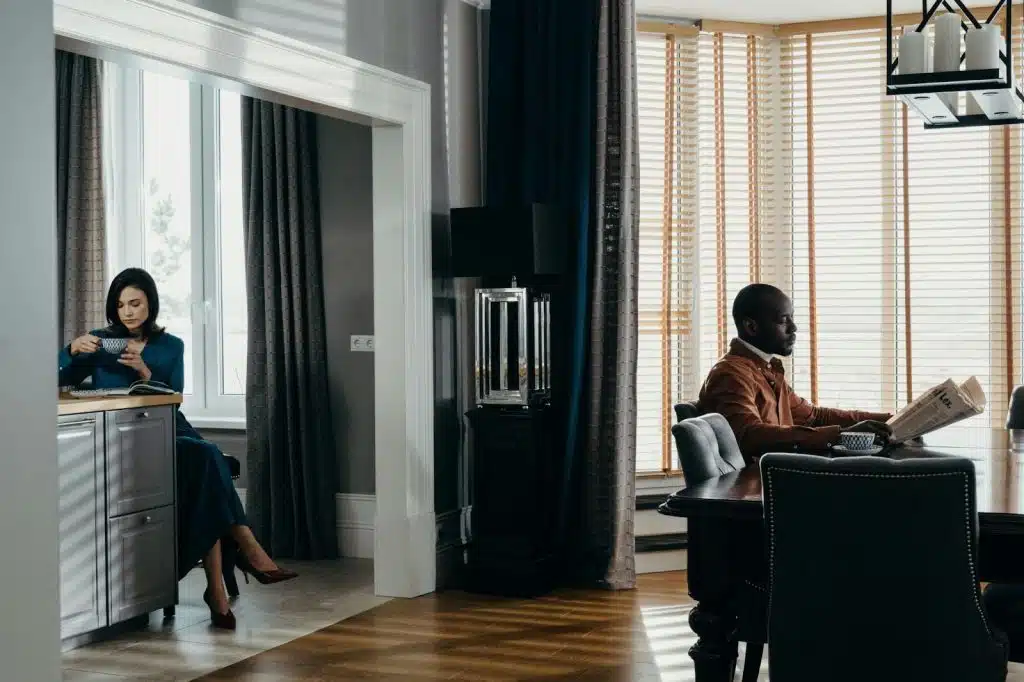
You go quiet during conflict and suddenly it feels like you committed a crime. She asks why you are silent. You tell yourself you are just keeping the peace. But silence is never just silence. It carries meaning whether you intend it to or not. If you are dating in your 30s, 40s, or 50s, you already know that how you handle conflict can make or break attraction. And if you are a woman reading this, understanding what his silence might mean can save you from overthinking or misreading the room.
You’re Processing Before You Speak

Sometimes you go quiet because you refuse to say something stupid in the heat of the moment. You know words can stick for years, so you choose restraint. You process internally and line up your thoughts before responding. This is controlled strength. You would rather respond with clarity than react with ego. The problem is, if you do not communicate that you are processing, she might assume you do not care. Saying you need a minute can change everything.
You Feel Disrespected

You shut down when you feel talked over or dismissed. Instead of escalating, you retreat. In your head, you think silence keeps you from exploding. You tell yourself that engaging will only make it worse. But to her, your silence can feel like emotional abandonment. If you feel disrespected, say that directly. Clear beats quiet every time.
You’re Avoiding Escalation

You know how fast arguments can spiral. One wrong sentence and now you are arguing about something from 2017. So you go quiet to stop the fire from spreading. You think you are being the mature one. Sometimes you are. But if you never return to finish the conversation, you leave tension unresolved. Peacekeeping only works if you come back and address the issue.
You’re Emotionally Overloaded

This one hits hard. Sometimes you are not calm. You are overwhelmed. Your chest tightens, your thoughts scatter, and you feel like anything you say will come out wrong. So you go silent because your nervous system is on overload. This is not manipulation. This is your body asking for a pause. The key is learning to say you feel overwhelmed instead of disappearing behind silence.
You Don’t Feel Safe Opening Up

If you have ever opened up and had it used against you, you remember. That memory sticks. So during conflict, you protect yourself by saying less. You fear vulnerability will turn into ammunition later. Silence becomes your armor. But armor also blocks connection. If you want depth in dating, you have to risk being seen.
You Think It’s Not Worth the Fight

Sometimes you genuinely believe the issue is small. You think arguing about it is a waste of time. So you disengage. You assume it will blow over. But what feels small to you might feel big to her. Dismissing it through silence can communicate indifference. Clarify that you value her feelings even if you see the issue differently.
You’re Holding in Anger

You might look calm on the outside. Inside, you are boiling. Silence becomes a pressure cooker. You think staying quiet proves control. In reality, suppressed anger leaks out later in sarcasm or distance. If you feel anger, own it. Expressing it calmly is more powerful than pretending it does not exist.
You Want Her to Notice Something’s Wrong

Sometimes silence is strategic. You withdraw because you want her to feel the shift. You hope she asks what is wrong. This can turn into a silent power play. It creates confusion instead of clarity. If you want attention, ask for it directly. Mature attraction grows from honesty, not guessing games.
You Grew Up Learning Men Should Not Express Emotions

You were taught to handle it alone. You saw men in your life stay stoic during conflict. So you copy that blueprint. Silence feels masculine because it feels controlled. But emotional intelligence is the real flex. Expressing yourself does not make you weak. It makes you safe to build with.
You’re Afraid of Losing Control

Conflict can trigger pride. You fear that if you speak freely, you might say something that damages the relationship. So you clamp down. You go quiet to maintain dominance over your emotions. But leadership in a relationship means guiding the conversation, not abandoning it. Calm communication beats silent tension.
You Don’t Know What You Feel Yet

Not every man can instantly label his emotions. You might know you feel off, but you cannot define it. So you stall. Silence buys you time. This is human. The solution is to practice emotional vocabulary so you can explain yourself better next time. Growth here changes everything in long-term relationships.
You Feel Unheard Anyway

If past attempts to communicate ended with you feeling ignored, you might stop trying. Silence becomes resignation. You think talking will not change anything. But if you keep showing up silently resentful, the relationship slowly erodes. If you feel unheard, say that specifically. It opens a new level of honesty.
You’re Testing Her Reaction

Sometimes you pull back to see how she responds. You want to know if she cares enough to lean in. This is subtle but real. It can come from insecurity or past hurt. Testing rarely builds trust, though. It creates anxiety. If you want reassurance, ask for reassurance.
You Need Space to Regulate

Space is not rejection. You might need physical or emotional distance to cool down. Silence is your temporary boundary. The problem happens when you do not explain that boundary. A simple statement like you need thirty minutes to clear your head can prevent hours of misunderstanding. Space works when it is communicated.
You’re Done But Don’t Want to Admit It

Hard truth. Sometimes silence signals detachment. You feel tired of repeating the same conflict. You stop fighting because you stop caring. This is dangerous territory. If you are mentally checking out, own that reality. Dragging it out in silence wastes both your time.
You Think Silence Is Strength

You may believe the strongest man in the room is the quietest one. In some situations, that is true. In relationships, silence without clarity can feel cold. Strength in dating is not about who speaks less. It is about who communicates better. When you choose words intentionally instead of withdrawing, you lead with maturity.








Ask Me Anything