
Most people like the idea that there’s one person out there who fits them perfectly. It feels efficient. Clean. Almost reassuring. Find the right one, and everything else falls into place.
The problem is that real relationships don’t run on destiny. They run on behavior. If you’ve built your expectations around fate instead of effort, some of what follows may sting a little.
Unrealistic expectations quietly poison good relationships

The soulmate idea trains you to expect ease. Natural chemistry. Effortless alignment. So when friction shows up — and it always does — it feels like evidence you chose wrong. In reality, conflict isn’t proof you missed your person. It’s proof you’re in a relationship with another human being.
Nearly half of divorced individuals in one national survey cited unrealistic expectations as a major contributor to the end of their marriage. That’s not fate. That’s disappointment stacked over time.
Waiting for “the one” can keep you stuck

If you believe there’s only one perfect match, every relationship becomes a tryout. You’re evaluating instead of building. You’re scanning for flaws instead of investing in strengths.
That mindset creates hesitation. Or worse, constant comparison. And when something feels slightly off, it’s easier to assume a better option exists somewhere else.
Intensity is not compatibility

Soulmate believers often chase the rush — the spark, the instant click, the “how did we get this lucky?” phase. Research shows people who hold strong destiny beliefs feel more satisfied early on. Then problems appear, and satisfaction drops faster than it does for people who see relationships as something you grow.
Chemistry gets you in the door. It doesn’t keep you married.
“If it’s meant to be, it shouldn’t be this hard” is a dangerous thought
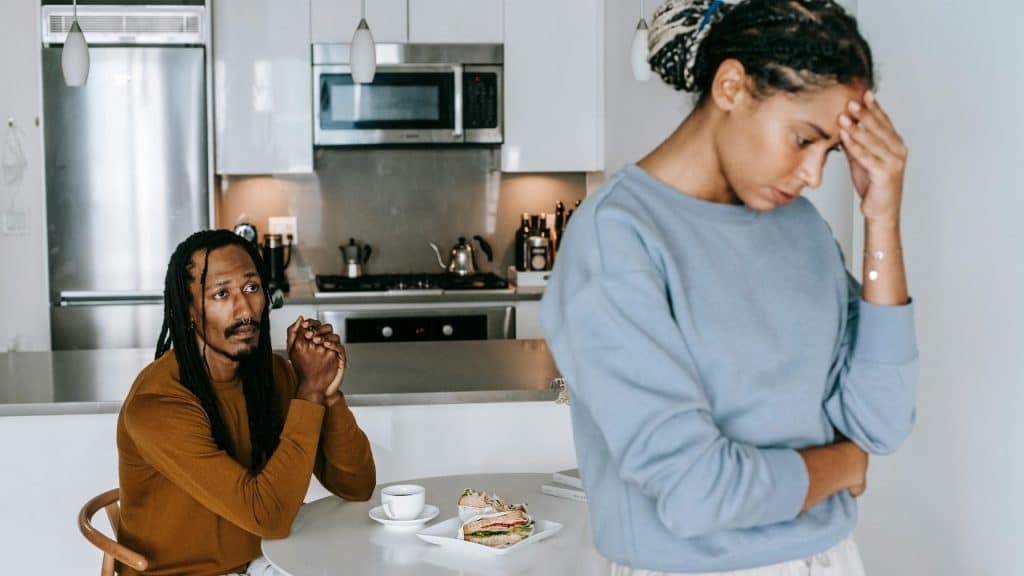
That sentence has ended more relationships than infidelity ever did. When love is framed as destiny, effort starts to feel suspicious. If you have to work at it, maybe it’s not real.
But the couples who last don’t assume harmony. They expect maintenance. They plan for it. They accept that ease comes and goes.
Soulmate-thinking lowers your tolerance for imperfection

If you believe your partner is your perfect match, flaws feel like betrayal. You weren’t supposed to sign up for this version of them.
People who approach marriage as something that lasts “as long as love lasts” are more likely to anticipate divorce than those who see it as permanent. Commitment changes how you interpret bad days. It shifts your reflex from exit to repair.
It encourages a consumer mindset

The soulmate myth subtly turns relationships into shopping. Does this person complete me? Do they meet my needs? Are they upgrading my life?
Lasting partnerships aren’t built on what you extract. They’re built on what you contribute. A me-first approach erodes trust quickly, even if you never say it out loud.
It makes breakups feel catastrophic

Losing a relationship is hard. Losing “your one chance at real love” feels existential. That’s the psychological trap of soulmate thinking.
When you believe there was only one right person, recovery becomes harder. You’re not just grieving a partner. You’re grieving a narrative that promised certainty.
It reduces your sense of control

Destiny beliefs place success outside your hands. Either you chose correctly or you didn’t. Either it was meant to be or it wasn’t.
That framing strips you of agency. Relationships thrive on deliberate choices — kindness, restraint, forgiveness, loyalty. When those feel secondary to fate, effort declines.
Passion fades. That’s not failure.

The early stage of love is chemically intense. It’s supposed to be. But it’s temporary. If your standard is permanent fireworks, normal seasons of calm will feel like warning signs.
Strong marriages eventually rely more on friendship and shared values than adrenaline. That shift isn’t settling. It’s stability.
There isn’t just one person you could be happy with

This one unsettles people. The truth is, most emotionally healthy adults could build a satisfying life with more than one compatible partner.
Believing there’s only one match narrows your vision and increases pressure. Believing there are several possible good matches puts the focus back where it belongs — on how you show up.
Conflict is not evidence you chose wrong

Every couple argues. The difference is how they interpret it. Soulmate thinkers often see conflict as proof they miscalculated. Growth-minded partners see conflict as information.
Handled well, conflict deepens understanding. Avoided or dramatized, it corrodes respect.
Commitment changes behavior

Couples who treat divorce as a live option tend to invest differently than couples who see marriage as permanent. When the door is always cracked open, effort becomes conditional.
Long-term commitment fosters trust and emotional security. That security makes people more generous, not less.
Expecting someone to “complete” you is a setup

If you’re waiting for a partner to fix your loneliness, insecurity, or sense of direction, you’re outsourcing personal development.
That burden strains relationships quickly. Two whole adults build something stable. Two incomplete adults try to merge into something neither can sustain.
Growth requires intentional effort

Strong couples don’t drift into depth. They choose it. They plan time together. They repair after mistakes. They adjust expectations as life shifts.
Research consistently shows that flourishing couples engage in small, deliberate actions — empathy, shared time, thoughtful gestures. None of it is mystical. It’s behavioral.
Fear of choosing wrong can sabotage choosing at all

Some people date endlessly because they’re terrified of locking into the wrong “forever.” That fear is often dressed up as high standards.
Healthy relationships move forward gradually. You learn someone across contexts, not just during chemistry-heavy moments. Waiting for absolute certainty guarantees paralysis.
Soulmates are built, not discovered

The most grounded view of love isn’t romantic, but it’s powerful: you make someone your soulmate over time. Through shared history. Through repaired arguments. Through showing up when it would be easier not to.
There’s nothing glamorous about that. But it’s durable.








Ask Me Anything