
Wellness gets hijacked by extremes. Either it’s green juice and grueling workouts, or it’s nothing. But what if the best health upgrades are actually small, quiet things that slip into your day without drama or disruption? You don’t have to uproot your life to feel better–you just have to pay attention differently. These habits won’t make your jeans tighter or demand an app to track, but they will clear mental fog, settle your nervous system, and make your body thank you in quieter ways.
Here are 18 refreshingly normal wellness habits that don’t require a single squat or calorie count.
1. Prioritize Light, Not Just Sleep

Sleep hygiene gets all the press, but light hygiene matters just as much. Your body’s internal clock–your circadian rhythm–runs on sunlight cues. Start your day with real sunlight in your eyes (no sunglasses, no window glass in between) within the first 30–60 minutes of waking. It helps set your cortisol and melatonin cycle naturally, which boosts mood, energy, and yes, better sleep at night. Light isn’t optional–it’s biological medicine.
2. Start a Two-Minute Grounding Ritual

Before your day takes off, anchor yourself. Stand barefoot on your porch. Sit in silence with your coffee. Put your hand on your heart and take a deep breath. You don’t need incense or mantras–just a brief pause where your nervous system registers, “I’m safe. I’m present.” Doing this daily rewires your baseline from reactive to regulated, and it costs nothing.
3. Talk to Someone Who Calms You Down

Not someone who just entertains you or agrees with you–but someone whose nervous system makes yours breathe easier. That person you always feel a little better after talking to? Make it intentional. Even ten minutes on a phone call can shift your whole state. Wellness isn’t solo work. Regulating in community is part of the deal.
4. Sit Outside for No Reason

Not to read. Not to scroll. Not to finish a task. Just sit there. Let your senses catch up with the environment–the wind, the birds, the ambient noises. The brain quiets when it’s not being fed. Unstructured stillness outdoors is a nervous system reset. It feels weird at first. Then it feels like oxygen.
5. Respect the Power of Transitions

Most of us live like tabs that never close. We switch from task to task without letting our minds catch up. Create micro-transitions: a minute of breathing before a meeting, closing your laptop and walking a loop around the house after work, or a song that signals your day is winding down. These moments buffer stress and help your brain stop dragging tension into everything.
6. Protect the First Hour of Your Day

How you start determines what follows. If the first thing you see is doomscrolling or work emails, your brain is already hijacked. Instead, set a rule: no news, no email, no social for the first 60 minutes. Use that time to orient yourself, drink water, step outside, stretch, journal, or just sit in peace. That hour is real estate–treat it like it’s valuable, because it is.
7. End the Day With a Body Check-In

Your body holds on to things you didn’t process. Before bed, scan your body–feet to head–and ask, “What am I holding?” Maybe your jaw’s tight, your shoulders are clenched, or your chest feels heavy. Don’t judge it, just notice. That act of naming and softening even a little helps your body downshift, so you don’t carry today’s stress into tomorrow’s sleep.
8. Drink Water Before Caffeine

Your body wakes up dehydrated. Caffeine compounds that. One full glass of water before your coffee helps your digestion, mood, and brain function work better throughout the day. Bonus: it sends a tiny signal to your body that you’re taking care of it before anything else takes your attention.
9. Curate What Enters Your Brain

Your mental diet matters just as much as your physical one. The podcasts, headlines, and social feeds you consume are shaping your worldview, your mood, your focus. Choose them on purpose. If something reliably irritates or drains you, that’s not “staying informed”–it’s self-sabotage. Wellness starts with the inputs.
10. Keep a “Don’t Do” List
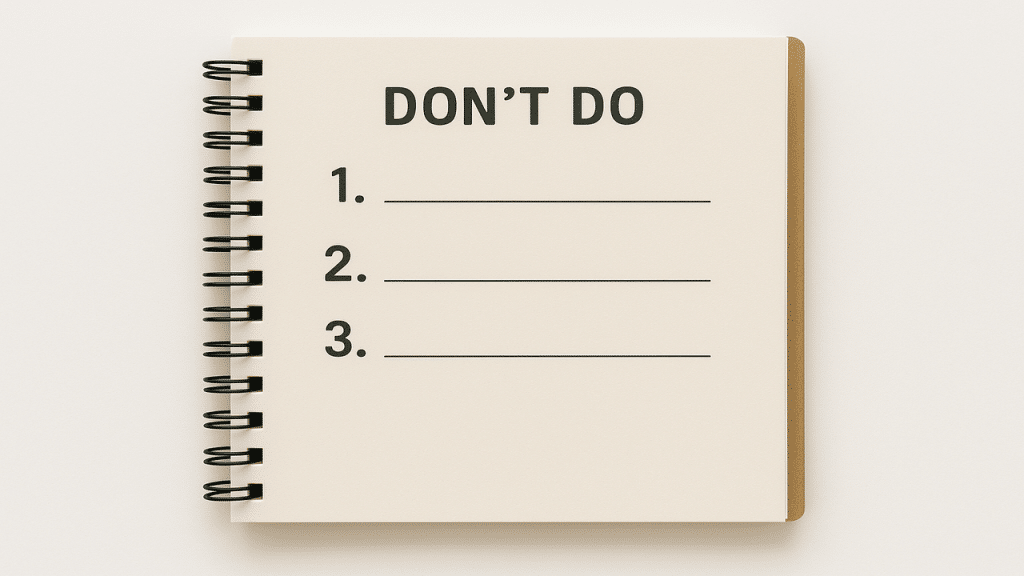
You don’t just need a to-do list–you need a list of things you’ve decided not to do. That includes draining obligations, people-pleasing, mindless scrolling, or anything that hijacks your peace. This list is your boundary blueprint. Revisit it when you feel overwhelmed. Sometimes wellness is just the discipline of deletion.
11. Touch Something Real

Your hands are wired for texture and contact, not just plastic screens. Touch wood, run your fingers through soil, hold something made of stone or fabric or leather. Engaging with natural materials quiets the part of your brain that’s overloaded with digital abstraction. It’s a weirdly powerful way to return to yourself.
12. Reclaim Your Evenings

Evenings aren’t just the cooldown before sleep–they’re a chance to reconnect with yourself. Dim the lights. Do one slow thing on purpose: stretch, light a candle, tidy something with care. Set a no-screens rule after a certain hour. You don’t have to become a monk–just protect your inner quiet from the noise of late-night stimulation.
13. Practice Deliberate Slowness

Pick one ordinary activity a day and do it at half-speed. Walking to your car, folding laundry, eating lunch. Slowing your body tells your brain, “We’re not in danger.” It trains you out of chronic urgency and helps you practice presence without needing a yoga mat. Slowness is a skill, and it starts in the mundane.
14. Let Silence Fill the Space

Most of us fill every pause with noise. But silence is where your thoughts can stretch out. Let yourself drive without music, cook without a podcast, or shower without a playlist once in a while. Silence is uncomfortable at first–but over time, it becomes where the clarity shows up. It’s where your real thoughts live.
15. Take Care of Something That Can’t Thank You

Tend a plant. Feed the birds. Pick up trash at the park. These small acts recalibrate you away from self-focus and toward connection. They remind your nervous system that you exist in a larger ecosystem, and that care doesn’t always have to be reciprocal to be meaningful. It’s strangely regulating.
16. Keep Your Promises to Yourself

Not just the big ones–the tiny ones, too. If you say, “I’ll get up when my alarm goes off” or “I’ll journal for five minutes” and then blow it off, your brain learns you can’t be trusted. Keeping your word to yourself builds self-respect–and that, more than anything, affects your long-term well-being.
17. Make Time for Non-Productive Joy

Most adults forget how to play. Pick up something that makes you lose track of time, with no goal other than joy–sketching, dancing, doodling, building a Lego city. If your joy has to be useful or impressive to count, it’s not joy. This kind of play restores emotional balance and lowers stress without feeling like effort.
18. Let Yourself Feel Your Feelings All the Way

Most of us try to skip straight to the “fix.” But feelings metabolize when you actually let yourself feel them–without numbing, judging, or suppressing. Sit with the sadness. Acknowledge the anger. Breathe through the anxiety. Emotional digestion is just as essential as food digestion–and ignoring it only creates inflammation somewhere else in your life.








Ask Me Anything