
Ah, boundaries. It’s one of those psychological buzzwords that have become notorious in the last few years, thanks to Insta-therapists who throw it around like glitter at a self-help party without defining it properly. But boundaries aren’t just self-care fluff; they’re the invisible lines that tell people how they should treat you. And more importantly, how you treat yourself.
But there is a way to draw those lines without drama, guilt, or ghosting. Here is a step-by-step guide to communicating boundaries in a way that helps you and your relationships.
1. Be Clear on Your Needs

You can’t communicate a boundary you don’t understand yourself. So before you open your mouth, pause and ask: What’s bothering me? What behavior do I want to stop or adjust? And why does it matter? Boundaries aren’t just about saying “no.” They’re about saying “yes” to your own emotional bandwidth, values, and safety. If you’re vague about your needs, your message will be, too.
2. Make It About You

When you phrase a boundary like a blame game–“You always do this” or “You make me feel”–you’re inviting defensiveness. Instead, flip the script. Say, “I feel overwhelmed when plans change last minute, so I need more heads-up.” Use “I” statements to ground the boundary in your experience, not in their behavior. It’s not about controlling others–it’s about taking care of yourself.
3. Keep It Direct and Simple

You don’t need a thesis statement or a TED Talk. Boundaries work best when they’re straightforward. Long explanations often come from guilt, not clarity. Practice saying it in one or two sentences. “I don’t lend money to friends.” “I’m not comfortable talking about that.” “I need a bit of space this week.” That’s enough. Less is more. Clarity is kindness.
4. Communicate It Early, Not After You Explode

A boundary said too late often comes out as resentment. Don’t wait until you’re fuming or ready to cut someone off. The earlier you set the tone, the less dramatic it feels. Boundaries aren’t threats–they’re proactive guardrails. If someone’s behavior is rubbing you the wrong way, speak up early while you still have calm energy to work with.
5. Don’t Over-Explain or Apologize

You are allowed to have limits. Full stop. You don’t need a 300-word justification for saying no to dinner or opting out of a conversation. When you over-explain, you’re unconsciously asking for permission. But you’re not doing anything wrong. Try this: state your boundary, pause, and let silence do the rest. Confidence doesn’t overcompensate.
6. Watch Out for Boundary Pushers

Some people test limits–on purpose or subconsciously. They may guilt you, joke about your boundary, or ignore it altogether. That’s not a reason to back down. That’s a red flag. If someone consistently disrespects what you’ve clearly expressed, it says more about them than you. Boundaries without consequences are just suggestions. And you’re not in the business of suggestions.
7. Be Ready to Repeat Yourself Calmly

Not everyone will get it the first time. That’s okay. What matters is consistency. If you waiver or bend the rules “just this once,” people learn that your boundary isn’t real. Think of it like teaching a new routine: it takes repetition. “I still need space.” “Like I mentioned earlier, I don’t discuss that topic.” You don’t need to get angry–you just need to be firm.
8. Anticipate Discomfort and Move Through It

Let’s be honest: boundary-setting feels awkward at first. You might feel selfish, mean, or guilty. That’s not a sign you’re doing it wrong–it’s a sign you’re doing something new. Growth rarely feels cozy. Stay with the discomfort. You’re not being rude; you’re being responsible for your own emotional ecosystem. And over time, it gets easier.
9. Use the Sandwich Method

If the boundary is especially delicate–say, with a boss or a family member you love–try the sandwich method: appreciation + boundary + reassurance. “I really enjoy our time together. I’ve noticed I need a bit more quiet time after work to recharge. Just wanted to let you know–it’s nothing personal.” This structure helps soften the message while keeping it firm.
10. Embrace That You Can’t Control the Outcome

ou can control how clearly and kindly you communicate. You can’t control how people react. Some will respect it. Some won’t. Some will surprise you. Don’t contort yourself into a boundary that pleases everyone–it defeats the point. Your job is to speak your truth with love and clarity. What they do with that truth is their business, not yours.
11. Practice Through Low-Stakes Situations

You don’t have to start by confronting your most boundary-crossing relative. Like any skill, boundary-setting gets better with reps. So start small. Say no to plans you’re not feeling. Ask for more time before replying to a group chat. Decline a favor when your plate’s full. These “micro-boundaries” build your confidence and help you find your voice before tackling the big stuff.
12. Boundaries Aren’t Ultimatums
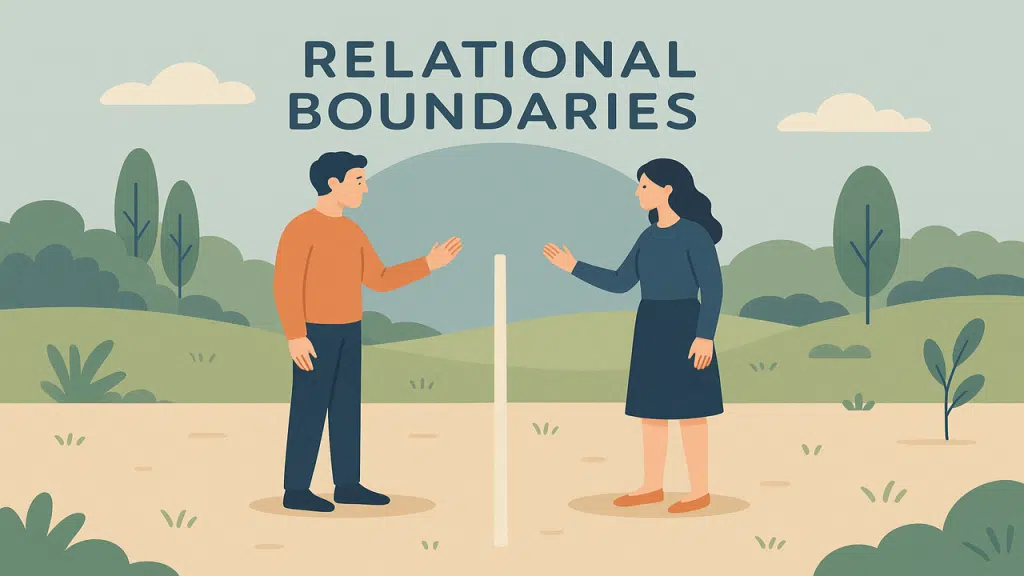
An ultimatum sounds like: “If you don’t change, I’m gone.” A boundary says: “Here’s what I need to stay in this relationship in a healthy way.” See the difference? Boundaries come from self-respect, not emotional manipulation. They’re not threats; they’re frameworks. And unlike ultimatums, they aren’t about controlling others–they’re about guiding yourself with clarity and intention.
13. Be Consistent

If your words say “I don’t have time,” but your actions scream “I’ll drop everything for you,” guess what people will believe? Your energy has to match your boundary. This isn’t about being cold–it’s about being congruent. If you say you’re unavailable, don’t keep replying to messages immediately. Consistency builds trust–and people respect boundaries they can feel, not just hear.
14. Know When Silence Is a Boundary

Not all boundaries need a speech. Sometimes, stepping back, staying silent, or not engaging is the boundary. You don’t owe everyone access, answers, or explanations. If someone keeps baiting you into conflict or violating your peace, choosing not to respond is a form of self-respect. Silence isn’t passive when it’s intentional–it’s powerful.
15. Boundaries Aren’t Walls

Boundaries aren’t meant to keep people out. They’re meant to let the right people in, the right way. A healthy boundary says, “I want to connect, but here’s how that works best for me.” If your boundaries are turning into rigid isolation, it may be time to reflect. Real boundaries protect your emotional wellness and your relationships–they create clarity, not distance.
16. Revisit and Revise

Boundaries aren’t permanent fixtures–they evolve as you do. What you needed last year might not be what you need today. And that’s okay. Check in with yourself regularly: “Is this still serving me?” Don’t be afraid to soften, reinforce, or reword your boundaries as your circumstances change. Boundaries are living things. Keep them honest and current.
17. Watch How People React and Learn From It

People’s reactions to your boundaries are data. Someone who respects your needs without guilt-tripping you? That’s someone safe. Someone who dismisses or punishes you for protecting your peace? That’s someone to watch. Boundaries reveal character–not just yours, but theirs. Pay attention. And remember: you’re not being difficult for asking for emotional hygiene. You’re just being grown.
18. Affirm Yourself After the Conversation

Even when a boundary talk goes well, it can leave you feeling exposed or emotionally drained. That’s normal. So after the conversation, check in with yourself. Say something kind, even if it’s just a quiet “Good job for showing up for yourself.” Reinforce the truth: that you’re allowed to take up space. That advocating for your needs is strength, not selfishness. The more you affirm it, the easier it becomes to believe.








Ask Me Anything